
17 Aug 2026 affiliate marketing insights
Affiliate marketing can look simple and easy from the outside. You find a product, share it with your audience, and earn commission when someone makes a purchase or takes the required action. But as you explore different brands and campaigns, you’ll come across two terms quite often : affiliate programs and affiliate networks. They may sound similar, but they work in different ways.
An affiliate program is usually offered by a brand and lets you promote that brand’s products or services. An affiliate network, on the other hand, brings multiple brands and publishers together on one platform.
In this guide by Shareaprofit, we’ll explain how both work, what makes them different, and which option may suit your goals better. And why platforms like ShareAProfit have become a popular starting point for publishers and advertisers alike.
An affiliate program is a marketing arrangement run directly by a brand or business. When a company wants to grow sales through promotion, it sets up its own referral or affiliate system where : publishers (also called affiliates) sign up on their portal, get a unique tracking link, and promote their service or product and earn commission whenever someone makes a purchase or completes an action through that link.
Think of a software company that offers its own in-house referral system or an e-commerce store with a "Refer & Earn" page on its website. That's an affiliate program in its simplest form. The brand controls everything - the commission rates, the tracking software, the payout schedule, and the creative assets you're allowed to use.
Almost any business with an online storefront can run one - from small D2C (direct-to-consumer) brands to massive corporations. Some use in-house software; others rely on tools like a dedicated affiliate plugin or SaaS tracking platform, but the relationship still stays one-to-one between you and that single brand.
Now here's where things get more interesting. An affiliate network is not tied to one brand - it's a marketplace that connects many advertisers (brands looking for promotion) with many publishers (people or businesses with an audience) under one shared platform.
Instead of applying separately to dozens of individual programs, you join the network once, get access to hundreds or even thousands of affiliate campaigns across different niches, and manage everything from a single dashboard. The network acts as the middleman: it handles tracking, reporting, dispute resolution, and - most importantly - consolidated payouts.
Because the network already has relationships and trust built with hundreds of advertisers, it offers publishers a much wider range of opportunities without the friction of applying to each brand individually.
Affiliate programs and affiliate networks work together to make affiliate marketing possible. An affiliate program is created by a brand that wants publishers to promote its products or services. The affiliate network provides the platform where these programs can be listed, managed, and tracked. Publishers can join a network, choose suitable programs, and get affiliate tracking links for promotion. The network then tracks clicks, sales, and commissions and helps with reporting and payments. In simple terms, the affiliate program provides the offer, while the affiliate network provides the system that connects brands with publishers and manages the process.
Here's a side-by-side breakdown to make the distinction crystal clear.
|
Aspect |
Affiliate Program |
Affiliate Network |
|
Ownership |
Run by a single brand or business |
Run by a third-party platform hosting many brands |
|
Number of Offers |
One brand, one set of products |
Hundreds or thousands of campaigns across multiple niches |
|
Sign-up process |
Apply separately to each brand |
Apply once, access many advertisers |
|
Tracking system |
Brand's own tracking tool or plugin |
Centralized network-wide tracking dashboard |
|
Payments |
Paid individually by each brand |
Consolidated payout from the network |
|
Support |
Limited to that brand's team |
Dedicated account managers and support staff |
|
Scalability |
Harder to scale—more logins, more admin |
Easier to scale—manage many campaigns in one place |
|
Best for |
Niche-focused promotion of one product |
Publishers wanting variety, diversification, and efficiency |
|
Data & Reporting |
Isolated per brand |
Unified reporting across all active campaigns |
|
Approval Speed |
Varies brand to brand |
Often faster since the network pre-vets advertisers |
This table captures the practical differences that shape how affiliates actually work and earn.
Working directly with one brand has some clear benefits, especially for niche content creators:
Managing many affiliate programs can become difficult. An affiliate network makes the process easier by bringing multiple brands and offers together in one place.
The honest answer is: it depends on your goals, your audience size, and how much time you want to spend on admin work.
For most beginners and even experienced marketers, affiliate networks make things easier. They offer more options, simple management, and less work. This is the gap platforms like ShareAProfit aim to fill.
As you explore affiliate marketing, you’ll come across a few common affiliate commission models:
Some affiliate programs offer only one model. A strong affiliate network can give you access to different models, helping you choose campaigns that match your audience and traffic.
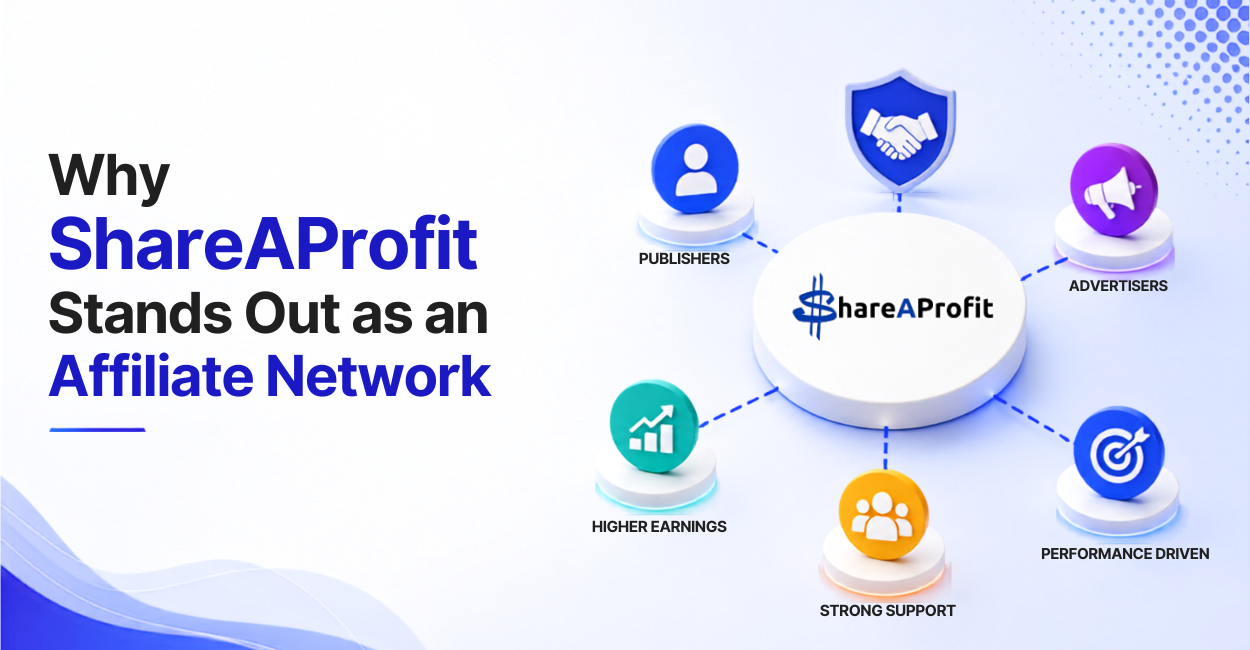
The ShareAProfit affiliate network offers a simple way for publishers and advertisers to manage affiliate campaigns in one place. Here are some key benefits:
The choice between an affiliate program and an affiliate network depends on how you want to work. If you have a strong connection with one brand or focus on a very specific product, a direct affiliate program can be a good fit. But if you want to promote products from different brands, manage campaigns in one place, and explore more earning opportunities, an affiliate network is usually more practical.
For publishers and advertisers, an affiliate network can make things easier by offering more options, simple tracking, and better management. Platforms like ShareAProfit bring these benefits together in one place. If you want more flexibility and different earning opportunities, starting with an affiliate network can be a practical choice.