07 Jul 2026 Expert Talk
Affiliate links only make money when people click on them and buy something. In 2026 it is not enough to share affiliate links. Rising ad costs, changing algorithms, and smarter shoppers means you need to build trust, choose the platforms, and stay connected with buyers.
This guide by Shareaprofit explains exactly where to promote affiliate links, where to place them for better results, and and which approaches are producing real commissions — right now in 2026..
Search has changed a lot. Now search results now often answer questions directly. Fewer people visit websites for information. To stand out, your content needs to include experiences, honest reviews, useful comparisons, and personal insights. Generic link-dropping no longer produces meaningful commission income.
Platforms like Instagram and Pinterest make it easy for users to buy things without leaving the app. Email marketing is still effective — personalized and well-timed emails outperform mass messages. Short-form video on TikTok and YouTube Shorts has created entirely new purchase pathways that did not exist at scale even three years ago.
This does not mean affiliate marketing is harder. It simply means that sharing affiliate links is no longer sufficient on its own. Success now depends on choosing the platforms that match your content style, building genuine audience trust, and following up with visitors who did not buy the first time. The mechanics have shifted — the opportunity has grown.
People also want proof that you have actually used the product. Real photos, personal results, or short videos showing the product in use build more trust than stock images. This kind of content helps you connect with readers and perform better in search results
These are the promotion methods consistently producing results for affiliate publishers in 2026 — each one explained with why it works, how to execute it, and what most publishers get wrong.
Blogs are one of the best places to earn affiliate commissions because they keep getting traffic from search engines — often for years after publication. A single well-optimised product review or comparison post can generate commissions every day without any additional effort once it is ranked.
Write useful content like —
Mention products naturally where they fit. Test text links, buttons, or comparison tables to see what works best.",
Always disclose affiliate links and target keywords with buying intent. The most effective blog content for affiliate promotions is not the most promotional — it is the most genuinely useful.
When people search for something, they want to find what they are looking for. Someone searching for 'budget blenders' wants a comparison, not a biography of blender history. Structure your content so it answers the question in the first few lines and then supports it with detail.
Comparison tables, pros-and-cons lists, and 'who this is best for' sections all satisfy buyer intent and tend to earn featured snippet positions on Google. Keep language simple, use person, and place your affiliate link where the decision naturally happens, not buried at the bottom of a long article. The highest-converting affiliate pages answer the reader's primary question within the first screenful of content. Everything else supports that answer. Read our blog on how to write high converting affiliate content.
Each platform requires a different approach.
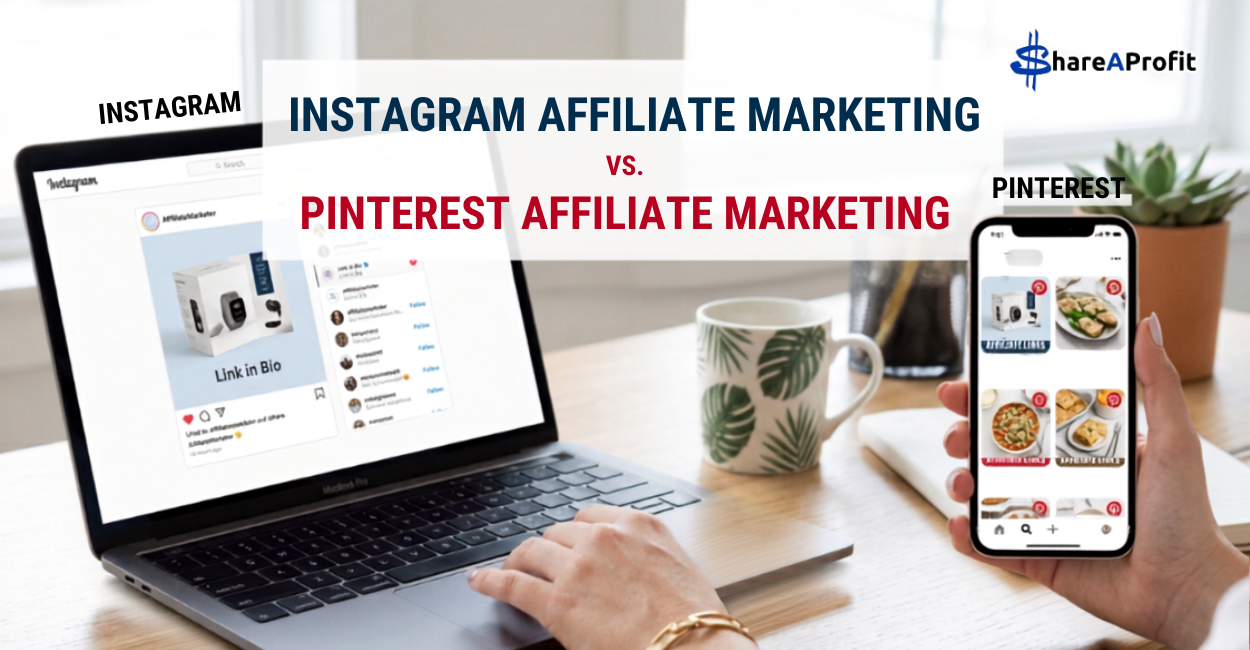
Instagram Affiliate Marketing: Instagram affiliate marketing works best when it feels like a recommendation from a friend, not an advertisement. Short demo videos, Reels showing a product in use, and Stories with swipe-up links consistently outperform static posts. Pin your top performing affiliate reel to your profile grid so new followers see your offer immediately. Consistency beats frequency - three quality posts per week drive more results than daily low-effort content.
Affiliate Marketing on Pinterest: Pinterest behaves more like a search engine than a social feed, which makes it one of the best ways to promote affiliate links long after you publish. A single optimized pin can drive traffic for months or years, unlike a tweet or Reel that fades within days. Write keyword pin titles and descriptions the same way you would optimize a blog post. Create pin designs for the same link regularly since Pinterest favors new visuals over reposted ones.
NOTE : For Instagram: three to four produced posts per week is enough. For Pinterest: create three to five new pin designs per existing content piece per quarter. Treat Pinterest as an evergreen SEO channel, not a social posting schedule.
Video builds trust faster than text because viewers can see the product, hear your reaction, and judge your credibility.
Unboxings, side-by-side comparisons, and "30 days later" follow-ups all perform well because they show experience rather than a polished sales pitch.
You should place your affiliate link in the description, pin a comment with the link, and mention it verbally in the video since many viewers never scroll to the description box.
For short-form video on TikTok and YouTube Shorts: hook the viewer in the first two seconds with the problem the product solves, demonstrate the product in use for fifteen to twenty seconds, and end with a clear CTA directing to your link in bio. Product demonstration content consistently converts at 2–5× the rate of talking-head promotional content on short-form platforms.
Pin a comment on every YouTube video with your affiliate link and a one-sentence reason to click it. Pinned comments appear immediately below the video and are visible before viewers scroll to the description — capturing attention at peak engagement.
A social media algorithm can change at any time. Your email list is something you own.
You should group subscribers based on their interests and send them relevant offers instead of the same email to everyone. A simple weekly email with a few product recommendations and one affiliate link usually gets better results than an email filled with too many offers.
Paid advertising can help you reach more people and increase affiliate sales once your organic content is performing well. Focus on social media platforms like Facebook, Instagram, Pinterest, or YouTube, where you can target users based on their interests, age, location, and online behavior. Start with a small budget and test different creatives, audiences, and ad formats to find what delivers the best results.
Track your campaign performance regularly and optimize your ads based on clicks, conversions, and return on investment. Always check your affiliate program's advertising policies before running paid campaigns to avoid breaking any rules or risking account suspension.
NOTE : Always check your affiliate programme's advertising policies before running paid campaigns to avoid breaking any rules or risking account suspension.
Never use paid traffic to test an unproven offer. Validate conversion rate and offer quality with organic traffic first, then use paid traffic to scale what is already working. Running paid ads to a poorly converting page amplifies the loss, not the income. Read our blog on Best traffic sources for affiliate marketing to know which source is the best to generate traffic and earn affiliate commission.
Forums and question-and-answer websites are great places to connect with people actively looking for recommendations. Answer questions honestly and provide useful information before mentioning any products.
Only recommend products that genuinely solve the user's problem. If community rules don't allow affiliate links, direct users to your website where they can learn more. Consistently sharing helpful answers helps build your reputation and can generate long-term traffic from both the community and search engines.
Quora answers that rank on Google can generate affiliate traffic for years. Reddit contributions in active niche communities build substantial domain authority through natural backlinks. The key is always to be the most genuinely helpful answer in the thread, not the most promotional one. Communities ban promotional accounts and reward genuine contributors.
Tip : Search your niche on Quora and Reddit to find questions that appear in Google search results. Answer those questions comprehensively, then add a natural link to your full guide or comparison page.
If you create online courses, you can naturally recommend products or tools while teaching. Suggest software, books, or resources that help students complete lessons more effectively.
Explain why each recommendation is useful and how it supports the learning process. Avoid promoting too many products, as this can reduce trust. Always disclose affiliate partnerships so students know you're being transparent.
Note : Course-based affiliate recommendations convert at some of the highest rates of any placement because learners have already committed to the subject and trust the instructor's expertise. A student who has paid for your course on content creation will naturally trust and act on your recommendation for a specific writing tool — the trust relationship is pre-established
Free resources such as ebooks, checklists, templates, worksheets, and downloadable guides are excellent places to include affiliate recommendations. Since readers have already chosen to download your resource, they are more likely to trust your suggestions.
You should recommend products that directly relate to the content. For example, a travel checklist can include luggage, travel organizers, or booking services, while a marketing guide can recommend useful software tools. Keep the focus on providing value first, and use affiliate links only where they genuinely improve the reader's experience.
Free resources generate compounding affiliate income: you create the resource once, it gets downloaded repeatedly over months or years, and every download is a potential affiliate conversion. A well-designed resource also builds your email list simultaneously — capturing both the immediate affiliate opportunity and the long-term email relationship.
You cannot improve what you do not measure. Use your affiliate network's dashboard so you can see which specific placement, platform, or piece of content drives the clicks and conversions.
Review performance weekly rather than daily since affiliate data needs volume to show meaningful patterns. Test one variable at a time, such as link placement or call-to-action wording, so you know exactly what caused a change in results.
Before promoting any affiliate link, check how much commission it pays, how long the cookie lasts, and whether payments are made on time. A longer cookie duration gives you a better chance of earning commissions if customers return later to make a purchase.
Choose affiliate programs that offer real-time reporting so you can easily track clicks, conversions, and earnings. Joining a trusted affiliate network like ShareAProfit also makes it easier to find reliable brands, monitor your performance, and receive dedicated support.
Finally, do not choose a program based only on high commissions. Make sure the brand has good customer reviews, quality products, and reliable service. Promoting trusted brands helps build your audience's confidence and leads to better long-term results.
Many beginners add too many affiliate links to one page. This can confuse readers and reduce clicks. Instead, use only a few relevant links where they make sense.
Promoting affiliate links successfully in 2026 is not about being everywhere or inserting links into every piece of content. It is about choosing the channels that suit your content style and your audience's behaviour, building genuine trust before asking for a click, and creating content that helps people make better decisions — not just content that points them toward a product
The platforms covered in this guide — blog content, email lists, Pinterest, YouTube, Instagram, communities, free resources, and online courses — each work on the same underlying principle: trust first, then recommendation, then conversion. The conversion rate difference between a trusted recommendation and a cold link placement is not marginal. It is typically 3–10×.
Start with one or two channels. Build them properly. Measure what is working. Then expand. And when you are ready to choose the right affiliate programmes to promote through those channels, partner with shareaprofit that gives you real tracking, reliable payouts, and offers your audience will genuinely value.