07 Oct 2024 Expert Talk
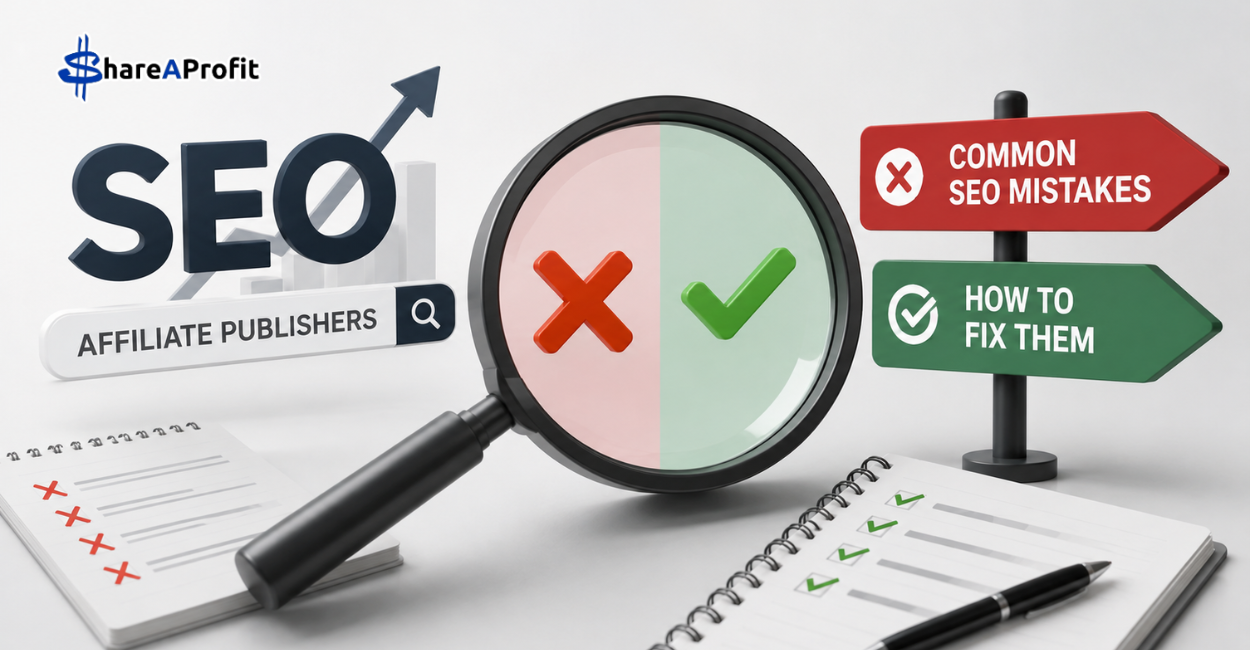
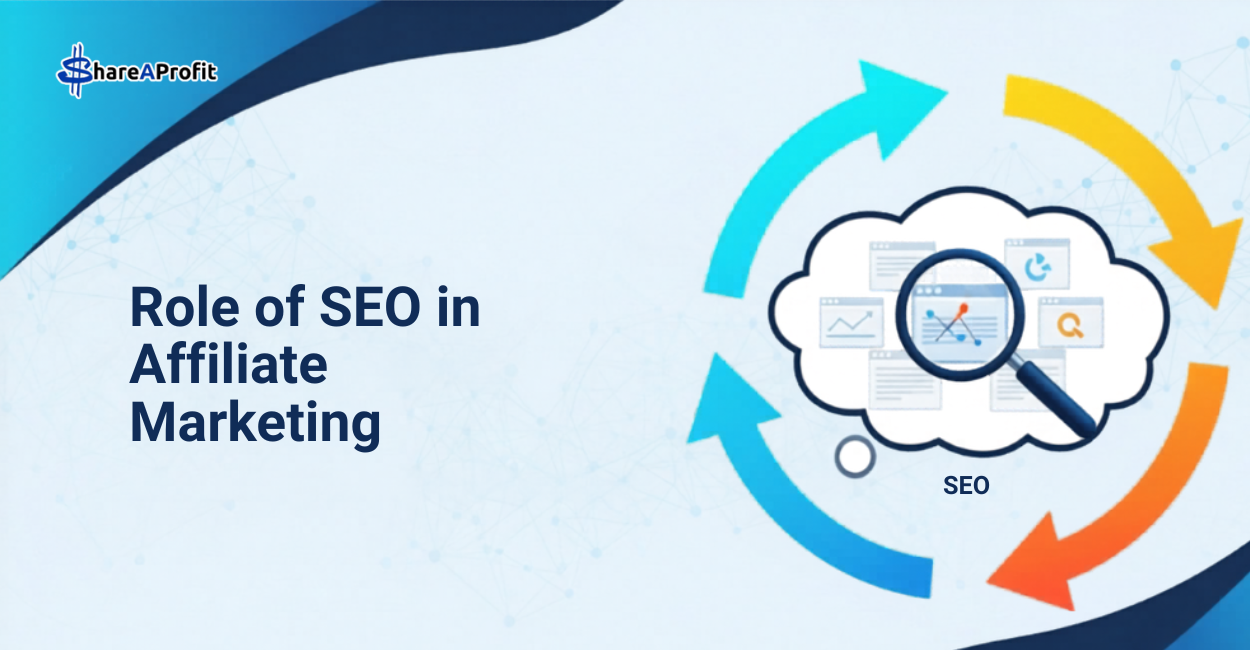
If you’ve ever tried to make money online using affiliate marketing, you already know it can feel pretty cutthroat. Thousands of affiliate marketers produce similar content, target similar audiences, and promote similar products. What consistently separates those who earn a sustainable income from those who barely get clicks? In the overwhelming majority of cases, the answer is SEO. — Search Engine Optimization.
Traffic is the lifeblood of affiliate income. But not all traffic is equal. Understanding the role of SEO in affiliate marketing is not just useful — it is essential. Without organic traffic, most affiliate websites would struggle to stay alive for long. This guide by Shareaprofit walks you through the whole thing, from the basic ideas to more advanced tactics, so you can see clearly how SEO + affiliate marketing work together and why it can lead to long-term success.
Before we go deep, let us make sure we are aligned on what affiliate SEO actually is. In plain terms, affiliate marketing is a performance-based setup where you promote someone else's product or service, and earn a commission whenever a visitor clicks your link and takes a desired action — usually a purchase.
Your role in that arrangement is matchmaking: connecting the right people with the right offer at the right moment. SEO — Search Engine Optimisation — is the most powerful, lowest-cost way to do that matchmaking at scale, repeatedly, without burning through an ad budget every month.
Affiliate marketing SEO is specifically the practice of optimising your content, website structure, and authority so that your affiliate pages rank on Google for the search terms your target audience uses when they are researching a purchase.
A lot of beginners jump straight into paid advertising—Facebook ads, Google ads, or even influencer promotions. Sure, those methods can work, but there’s a big catch. The moment you stop paying, your traffic tends to disappear too.
Affiliate SEO is different; it’s more like an effort that compounds. When your pages rank high on Google, they keep bringing visitors in day after day, week after week, month after month — and you don’t need ongoing ad spend. Your organic search presence becomes a long-term asset — one you build once, maintain periodically, and that keeps generating commissions for years.
Affiliate SEO : Compounding Asset
Paid Advertising : Rented Visibility
This is why SEO and affiliate marketing work so well together: the content-driven nature of affiliate promotion aligns perfectly with what Google rewards. Write genuinely helpful content that assists readers in making purchase decisions, optimise it well, earn authority through backlinks, and your organic search presence becomes a self-reinforcing income engine that reduces your cost per acquisition to near zero over time.
Note - "The affiliates who build the most durable, high-income businesses are almost never the best ad buyers. They are the best content builders — people who understand that a well-optimised review post is not just a piece of content, it is a permanent traffic and income asset."
Everything about SEO starts with keyword research. For affiliate marketers, that means figuring out the exact words and phrases people are actually searching on Google before making a purchase. There is a critical difference between someone who searches for "what is protein powder" (curiosity stage, unlikely to buy today) and someone who searches for "best protein powder for muscle gain under $100" (decision stage, actively comparing options before purchasing). Your affiliate content must target the second type of searcher — the one with genuine purchase intent. Those are known as “buyer-intent keywords."
Here are the keyword types that tend to work best for affiliate content:
“"Best [Product] for [Use Case]" : Highest Intent
Searches by people who know they want to buy something and are looking for the best option for their specific need. Very high purchase intent. e.g., Best running shoes for flat feet.
"[Product] Review [Year]" : Very High Intent
Searches by people actively evaluating a specific product before purchase. They have shortlisted it and want validation. Excellent conversion potential. e.g., Bluehost review 2026.
"[Product A] vs [Product B]" : Decision Stage
Searches by people who are choosing between two specific options. They are at the final stage of their decision process — very ready to purchase. e.g., Hostinger vs Bluehost 2026.
"How to [Solve Problem] with [Product]" : High Intent
Informational in format but commercially valuable — people seeking a solution often purchase the recommended product that solves it. e.g., How to lose weight with meal replacement shakes.
You can use free tools like Google Search Console, Ubersuggest, or even Google’s own autocomplete to locate those terms. If you have more money and want faster depth, paid tools like Ahrefs or SEMrush go even further. The main thing is to aim for keywords with obvious buying intent and competition you can realistically handle, especially if you are just getting started.
After you have your keywords, the next step is writing the kind of content that Google actually wants to display to people. On-page SEO is everything you do directly on your page to help it rank better. The goal is not to mechanically stuff keywords into every line — Google's algorithm recognises this and penalises it. The goal is to write for human readers first and make it easy for search engines to understand what your page is about.
Key on-page bits for affiliate marketing SEO include the following:
Important : Write for human readers first; optimize for search engines second. When your content genuinely helps someone make a better purchase decision, it tends to perform well in both dimensions — without any keyword forcing.
Google evaluates content using a framework called "E-E-A-T," which means Experience, Expertise, Authoritativeness, and Trustworthiness. For affiliate marketers, this matters a lot because Google has gotten stricter over time about thin or low-quality promotional pages.
In practice, E-E-A-T for affiliate content means: your pages must show real-world experience with the products you review, share authentic insights about what worked, what did not work, and which specific person would benefit most. Where possible, include your own screenshots, test results, or usage photos. If you have relevant credentials or background in the niche, mention it. When users trust your content, Google trusts your content — and that trust is what drives both rankings and conversions.
Your content can be genuinely excellent — and Google still may not rank it well if your website is technically broken. Technical SEO is the behind-the-scenes infrastructure that makes your site accessible, fast, and easy for Google to crawl and index.
For affiliate marketers, the most important technical factors are:
Of all the ranking signals in Google's algorithm, backlinks — links from other websites pointing to your pages — remain among the most influential. A backlink from a reputable, relevant website is essentially a vote of confidence that signals to Google: "this content is worth ranking." The more quality votes your pages accumulate, the more authority Google assigns to your domain and your content.
For affiliate SEO, several link-building approaches consistently deliver results:
Guest Posting on Reputable Blogs in Your Niche
Write genuinely valuable content for established blogs in your niche and include a contextual link back to your affiliate site. The emphasis must be on genuinely valuable — editors of quality sites reject thinly-veiled promotional guest posts. Aim for guest posts that would stand on their own merit regardless of your backlink.
Creating Genuinely Useful Linkable Resources
The most naturally link-attracting content is comprehensive, data-rich, or uniquely useful in a way that makes other bloggers and journalists want to reference it. Original research, detailed buyer guides, comparison databases, calculators, and comprehensive glossaries all generate natural backlinks because other content creators find them worth citing.
Building Relationships with Other Creators in Your Niche
Niche directory listings, mentions in industry roundups, podcast interviews, and collaborative content all generate legitimate backlinks while building your brand presence in the community.
Tip : Avoid buying low-quality backlinks or joining link farms. Those shortcuts might look convenient, but they can get your site penalized by Google, and then months of effort just vanish. The goal should be earning links the natural way, driven by strong content.
Even the sharpest SEO plan won’t help much if you’re promoting the wrong products through a network that’s unreliable. Choosing the best affiliate network matters almost as much as how you optimize your content.
This is where platforms like ShareAProfit really show up. ShareAProfit is a growing affiliate network that ties publishers with quality offers across multiple niches, and in a way it feels a bit more organized than most. It also has transparent tracking, on-time payouts, and a dashboard that makes it simple to watch how your campaign is doing, right in real time. So whether you are newish to affiliate marketing or you already have experience, the ShareAProfit login process is clear and not overly confusing, and honestly, it’s built so you can begin fast without unnecessary complexity.
When your SEO efforts start bringing in traffic, having a reliable network in your corner means your hard work actually converts into income. A trustworthy platform removes the worry about missing commissions or unreliable reporting—letting you focus entirely on growing your content and rankings.
After you get the basics settled, there are more advanced moves that can push results a lot faster.
Topical Authority
Instead of writing one or two articles around a topic, build a whole content cluster around it. Create a main pillar article on a broad topic — "best home gym equipment" — and support it with dozens of related articles on specific products, buyer guides, training plans, and comparison posts. This gives Google a much stronger signal that your site is a genuine, deep resource on the subject — not just a collection of random articles. All pages in the cluster benefit from the combined authority, typically ranking higher than they would as standalone content.
Also, every keyword has a search purpose behind it: informational, navigational, or transactional. Your content style needs to match that purpose. If someone searches for “how to choose a VPN,” they are looking for a guide, not a pushy sales page. And if someone searches for “Hostinger coupon code,” they’re basically in buy mode already. When you align the format with intent, rankings improve and conversions usually follow pretty fast.
SEO is not something you do once and then forget. You should keep updating your existing pages with newer information, make cleaner comparisons, and maybe even update pricing. This is how you keep and improve your rankings over time. Google kinda likes freshness, especially when the niche moves fast, like technology, finance, or health.
Structure key sections of your content — especially definitions, how-to steps, and comparison tables — in formats that Google can extract for Featured Snippets and AI Overviews. Direct question-and-answer formatting, clear numbered lists, and concise definition paragraphs (40–60 words) all increase your chances of appearing in zero-click search results that drive brand awareness even without a click, and direct citations in Google's AI-generated answers.
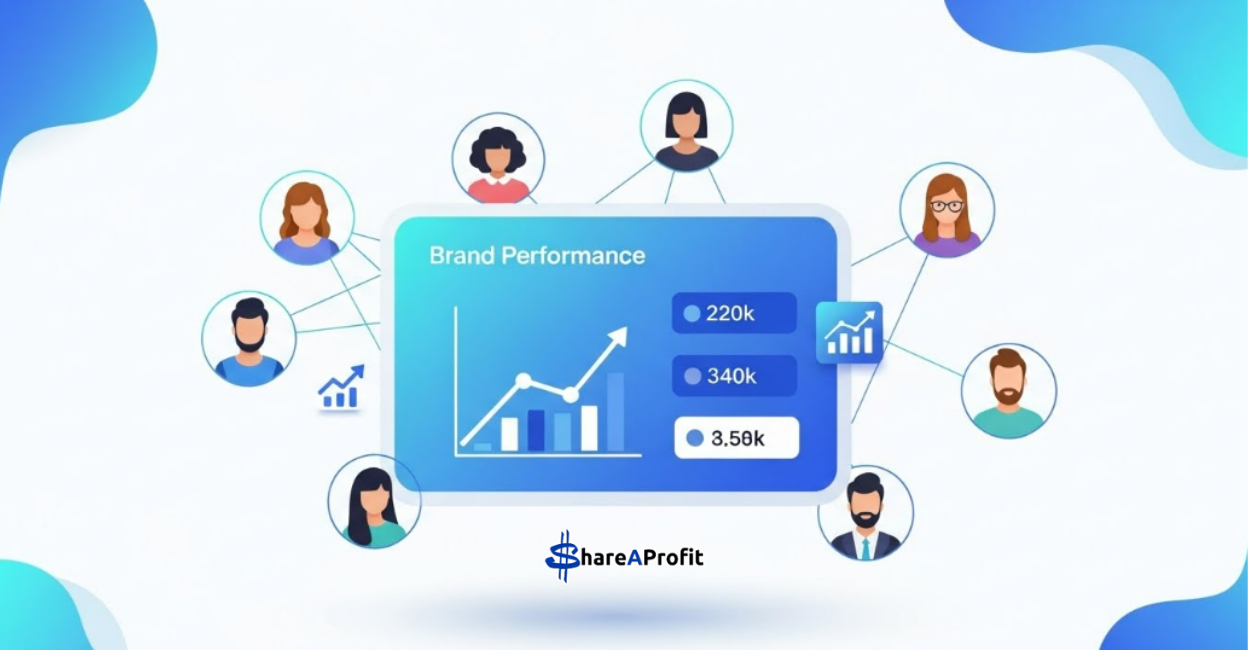
You cannot improve what you do not measure. Setting up proper tracking infrastructure is not optional — it is the foundation that makes every other optimisation decision data-driven rather than guesswork.
|
What to Track |
Tool |
What It Tells You |
Action to Take |
|
Keyword rankings |
Google Search Console |
Which queries bring clicks, impressions, and position |
Improve content for high-impression / low-CTR keywords |
|
Organic traffic |
Google Analytics 4 |
Pages generating most organic visits and engagement |
Double down on high-traffic topics with more cluster content |
|
Affiliate clicks |
UTM parameters + Network dashboard |
Which pages and link placements drive the most clicks |
Optimise link placement on high-traffic, low-click pages |
|
Conversion rate by page |
ShareAProfit login dashboard |
Which content pieces drive confirmed sales and commissions |
Identify top-converting content and build similar pieces |
|
Backlink growth |
Ahrefs / Google Search Console |
Which pages earn natural backlinks and from where |
Create more of the content types that attract organic backlinks |
|
Page speed / Core Web Vitals |
Google PageSpeed Insights |
Technical performance issues affecting rankings and bounce |
Fix loading issues — especially on mobile — as a priority |
For affiliate tracking specifically, check your click-through rates on your affiliate links, your conversion rates broken out by page, and which content is bringing the most commission revenue. Then blend that with what your ShareAProfit affiliate network dashboard is showing you. When you do this consistently, you end up with a clear picture of what is working and where your next optimisation effort should go.
Even experienced marketers still fall into traps, you know. But being aware of them gives you a real advantage. For example:
The connection between affiliate marketing SEO and long-term income is pretty undeniable. It takes a while to see movement; most of the time, it’s about three to six months for new content to start ranking.
You have to start with solid keyword research, not some random guess, and then write material that genuinely assists people, not just “covers” a topic. Don’t ignore the technical side either; fix the site problems you can actually measure. Then earn backlinks by focusing on quality and outreach and get cited in places that matter. And you should always track your results so you can keep tuning everything, again and again.
Put that SEO base with the right affiliate network like ShareAProfit—one that has real products, honest reporting, and dependable payouts—and honestly you pretty much have what you need to build a business that grows month by month.